Why Setting Boundaries Feels So Hard (And How to Start)

There’s a moment that happens for many people when they begin thinking about boundaries.
You know you need one.
You can feel it.
But when it comes time to actually say something - to say no, to ask for space, to express a limit - something in you hesitates.
You overthink the wording.
You wonder how the other person will react.
You start to feel guilty… even before you’ve said anything at all.
So instead, you stay quiet. Or you soften it. Or you go along with something you don’t actually want.
If this feels familiar, you’re not alone.
And more importantly, there’s nothing wrong with you.
What Boundaries Actually Are (And What They’re Not)
Boundaries are often misunderstood.
They’re not about controlling other people.
They’re not punishments.
And they’re not a way to push others away.
A boundary is simply a way of saying:
“This is what I’m okay with, and this is what I’m not.”
They define your emotional, mental, and physical limits.
They help you stay connected to yourself in relationships, rather than losing yourself in them.
Why Setting Boundaries Feels So Difficult
If boundaries feel hard, it’s usually not because you don’t understand them.
It’s because of what you’ve learned.
Many people struggle with boundaries because:
You were taught to prioritize others’ needs over your own
You learned that keeping the peace was safer than being honest
Your feelings were dismissed or minimized
You were made to feel responsible for other people’s emotions
Speaking up led to conflict, withdrawal, or disconnection
Over time, these experiences shape how your nervous system responds.
Instead of asking, “What do I need?”
you begin asking, “What will keep things calm?”
That’s where boundary difficulty begins.
These patterns often develop in relationships where your feelings haven’t been consistently received or respected.
You can read more about this inAre You Walking on Eggshells? Understanding Emotional Manipulation
Many of these patterns are rooted in codependency and people-pleasing dynamics.
You can explore this further here codependency recovery support.
Signs You May Be Struggling With Boundaries
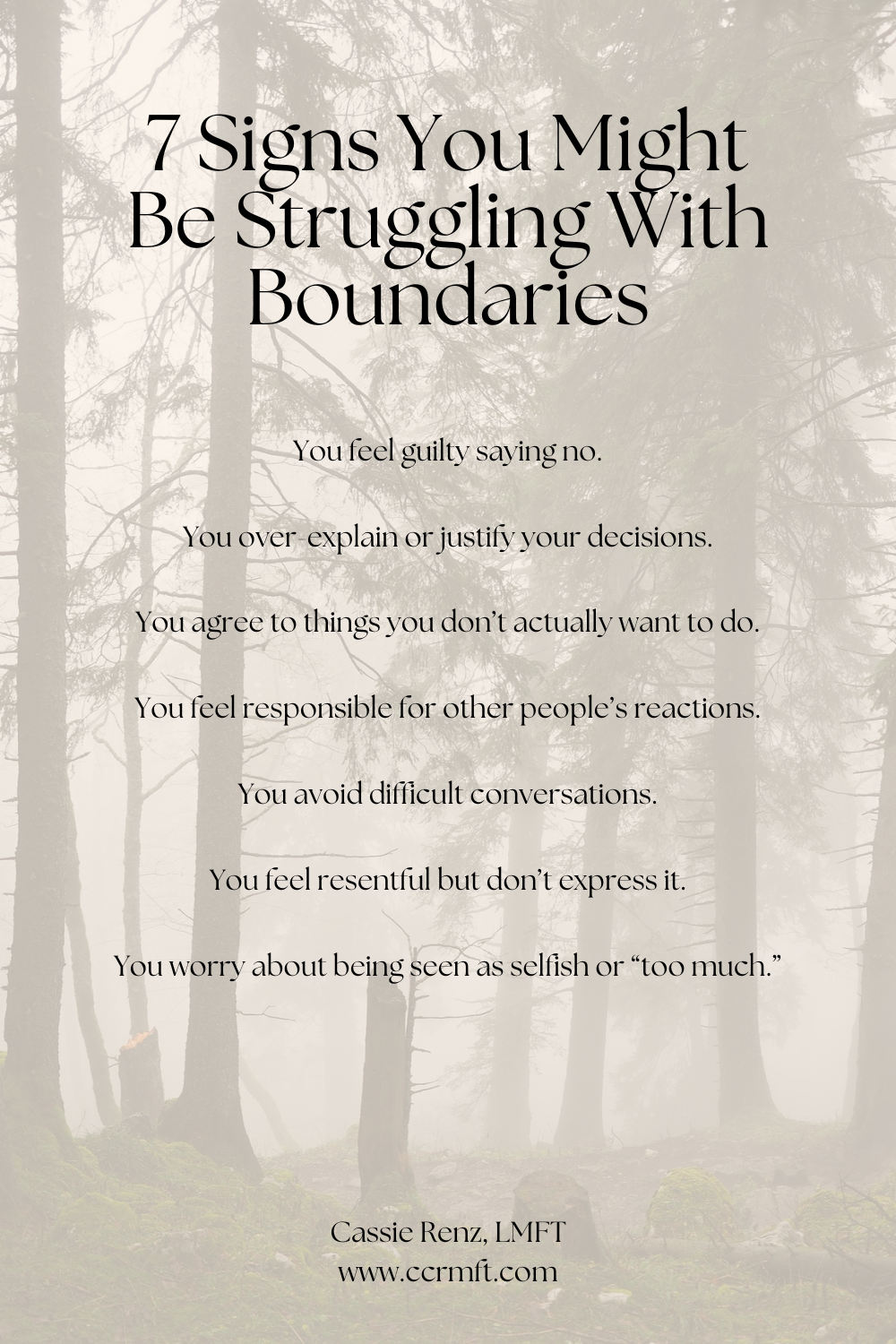
You might struggle with boundaries if:
You feel guilty saying no
You over-explain or justify your decisions
You agree to things you don’t actually want to do
You feel responsible for other people’s reactions
You avoid difficult conversations
You feel resentful but don’t express it
You worry about being seen as selfish or “too much”
These patterns are incredibly common, especially in codependency and emotionally draining relationship dynamics.
These patterns are especially common in emotionally draining relationship dynamics.
Learn more about support for emotionally draining relationships.
Why Boundaries Often Feel Like Guilt
One of the biggest barriers to setting boundaries is guilt.
You might think:
“What if I hurt them?”
“What if they get upset?”
“What if I’m being unreasonable?”
But here’s something important to understand:
Guilt doesn’t always mean you’re doing something wrong.
Sometimes, it simply means you’re doing something different.
If you’ve spent years prioritizing others, setting a boundary can feel unfamiliar and even uncomfortable.
That discomfort is part of the process.
It’s your system adjusting to a new way of relating.

How to Start Setting Boundaries (Without Overwhelming Yourself)
You don’t need to change everything at once.
Boundaries become easier when you start small and build confidence over time.
1. Start With Awareness
Before you set a boundary, notice where one is needed.
Ask yourself:
Where am I feeling drained?
Where am I saying yes when I mean no?
Where do I feel resentment building?
Your emotions are often the first signal that a boundary is needed.
2. Keep It Simple
Boundaries don’t need to be long explanations.
In fact, the more you explain, the easier it is to second-guess yourself.
Try short, clear language:
“I’m not available for that.”
“I won’t be able to take that on.”
“That doesn’t work for me.”
You don’t need to justify your needs.
3. Use Grounded “I” Statements
If it helps to add context, keep the focus on your experience:
“I need some time to think about that.”
“I feel overwhelmed, so I’m going to step back.”
“I’m not comfortable with that.”
This allows you to express yourself without blame.
4. Expect Discomfort (But Not Danger)
Setting boundaries may feel uncomfortable at first.
You might notice:
anxiety
self-doubt
the urge to take it back
This is normal.
You’re interrupting an old pattern.
Remind yourself: Discomfort doesn’t mean you’re doing something wrong.
5. Let Go of Managing Their Reaction
This is often the hardest part.
You can set a boundary with care and clarity, and the other person may still feel disappointed, frustrated, or upset.
That doesn’t mean the boundary was wrong.
Healthy boundaries allow space for:
your needs
their feelings
But you are not responsible for regulating their emotions.
Learning to set boundaries is closely connected to rebuilding your voice and self-trust.
You may also resonate with How to Reclaim Your Voice After Years of Silence
What Happens When You Start Setting Boundaries
When you begin setting boundaries, a few things often happen:
You feel both relief and discomfort
You become more aware of relationship patterns
Some people may respond positively
Others may resist or push back
That pushback can feel discouraging but it’s often part of the adjustment.
Over time, boundaries help create relationships that feel:
more balanced
more respectful
more aligned with who you are

Boundaries Are Not About Pushing People Away
They’re about staying connected to yourself.
They allow you to show up in relationships with:
more honesty
more clarity
more self-respect
Without boundaries, relationships often become rooted in over-giving and self-sacrifice.
With boundaries, they have the potential to become more mutual and sustainable.
You Don’t Have to Figure This Out Alone
If setting boundaries feels overwhelming, you’re not failing, you’re navigating something that often takes time, support, and practice.
If you’ve been caught in patterns of people-pleasing, emotional exhaustion, or difficulty expressing your needs, therapy can help you:
understand where these patterns come from
build confidence in your voice
learn how to set boundaries without guilt
feel more grounded in your relationships
If you’re ready to begin that process, you can learn more about working together here:
Emotionally Draining Relationships